
Why Modernizing High-Voltage Transmission Is the Foundation of the AI Economy
The United States is entering a new industrial era driven by artificial intelligence, advanced manufacturing, electrification, and clean energy. Yet the nation’s electric grid was largely built for the demands of the last century. As electricity demand accelerates, aging transmission and distribution infrastructure is struggling to keep pace, creating a growing gap between where power is generated, where it is needed, and how reliably it can be delivered.
America’s Power Grid Has a Capacity Problem—and It’s Becoming Harder to Ignore
The United States is entering a new industrial era. Artificial intelligence, advanced manufacturing, electrification, data centers, and clean energy are all creating opportunities that would have been difficult to imagine even a decade ago.
But there is a problem hiding underneath all of that growth.
The electric grid, which supposedly has been supporting this new economy, was largely designed for a very different one.
While computing technology, manufacturing, and energy generation have advanced rapidly, the infrastructure that moves electricity from where it is produced to where it is needed has not expanded at the same pace. Increasingly, the challenge is not simply whether America can generate enough electricity. It is whether we can actually deliver that electricity to the places that need it.
And that distinction is becoming critical.
A Grid Built for a Different Economy
The U.S. electric grid is one of the largest and most complex engineering systems ever built. For more than a century, power plants, substations, transformers, transmission lines, and local distribution networks have worked together to support industrial growth, suburban expansion, and eventually the digital economy.
It has served the country remarkably well.
But much of today’s transmission system still reflects decisions made decades ago. Large portions of the high-voltage network were built during the 1960s, 1970s, and 1980s. At the time, electricity demand was relatively predictable. Large coal and nuclear plants supplied steady baseload power, and generation was generally developed with established population and industrial centers in mind.
That model is changing quickly.
Electricity demand is no longer increasing slowly and predictably. AI computing, cloud infrastructure, semiconductor manufacturing, electric transportation, and the return of energy-intensive manufacturing to the United States are creating enormous new concentrations of demand.
At the same time, many of the country’s best renewable resources are located far from the cities and industrial regions that consume the most electricity.
The result is a geographic mismatch: we increasingly have generation in one place and rapidly growing demand somewhere else.
The transmission system connecting the two has struggled to keep up.
Transmission Is Becoming the Real Bottleneck
When people talk about future electricity shortages, the conversation usually begins with generation.
Do we need more natural gas plants? More nuclear power? More wind? More solar? More energy storage?
Those are important questions, but generation is only part of the equation.
Electricity is only useful when it reaches the customer.
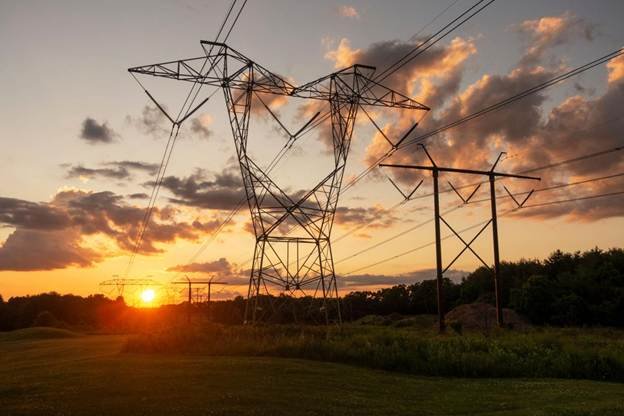
High-voltage transmission lines are essentially the interstate highways of the electric system. They move large amounts of electricity from generating facilities across regions and into substations, where local distribution networks take over.
The problem is that many of those electrical highways are becoming congested.
Utilities may have access to generation but still be unable to deliver enough power to a new industrial facility because the transmission system is operating near its limits. Renewable projects may be available to generate electricity but face delays due to inadequate transmission capacity. Developers can spend years waiting for utilities and grid operators to determine whether the system can accommodate their projects.
In other words, electricity may be available somewhere on the system.
The ability to move it is not.
That is an important distinction, and it is likely to become even more important as U.S. electricity demand accelerates.
AI Is Changing the Electricity Conversation
Few industries illustrate this challenge better than artificial intelligence.
Training large AI models, operating hyperscale cloud platforms, and running AI inference at enormous scale require extraordinary amounts of computing power—and computing power requires electricity.
Modern data center campuses can require hundreds of megawatts. Some planned developments could eventually exceed one gigawatt of continuous electricity demand.
Think about what that means.
A single large computing campus can consume electricity on a scale comparable to hundreds of thousands of homes.
And unlike many traditional commercial buildings, these facilities operate around the clock. AI infrastructure cannot simply shut down whenever the grid becomes constrained. Developers need reliable, stable power 24 hours a day, 365 days a year.
That makes the availability of electricity one of the first questions companies must consider when choosing where to build.
Can the utility provide enough power?
How quickly can the facility be interconnected?
Does the region have adequate transmission capacity?
Can additional generation or storage be developed on-site?
Increasingly, the answers to those questions can determine whether a multibillion-dollar project moves forward, faces delays, or has to select other locations.
The location of future AI infrastructure may therefore be influenced as much by electricity infrastructure as by land, fiber connectivity, tax incentives, or access to skilled workers.
Renewable Energy Has Its Own Transmission Problem
The United States has enormous renewable energy potential.
The Great Plains offer exceptional wind resources. The Southwest has some of the world’s strongest solar potential. Offshore wind resources exist along large portions of the Atlantic coast.
But renewable resources are often located far from major load centers.
That creates a straightforward infrastructure problem.
Building generation without building transmission is a little like constructing new highways that never connect to major cities. The infrastructure exists, but its economic value is limited because it cannot efficiently reach the people who need it.
This problem is shown in lengthy interconnection queues across the country.
Developers may wait years for transmission studies, network upgrades, approvals, and construction before their projects can begin delivering electricity. Some eventually abandon projects because the required grid upgrades become too expensive or the timeline becomes too uncertain.
Those delays do not affect only renewable developers.
They affect utilities, electricity customers, manufacturers, data centers, investors, and ultimately regional economic development.
The Cost of Congestion Is Easy to Miss
Transmission congestion is not always visible to the average electricity customer.
There is no warning light at home telling you that a transmission corridor hundreds of miles away has reached its limit.
Instead, the effects show up indirectly.
Electricity prices may increase because utilities cannot access lower-cost generation.
A manufacturer may postpone an expansion because sufficient electrical capacity cannot be delivered to its site.
A data center developer may choose another state because the interconnection timeline is too long.
Utilities may be forced to operate more expensive generating resources simply because transmission constraints prevent cheaper electricity from reaching customers.
Over time, these constraints can influence where companies invest and where jobs are created.
That is why transmission should increasingly be viewed as economic infrastructure, not simply electrical infrastructure.
Regions with reliable, expandable electricity systems will have an advantage in attracting energy-intensive industries. Regions where the grid is constrained may find it increasingly difficult to compete.
The Challenge Doesn’t Stop at Transmission
High-voltage transmission receives a great deal of attention, but the local distribution system faces many of the same pressures.
Traditional distribution networks were designed primarily for one-way electricity flow. Large power plants generated electricity, transmission lines moved it across long distances, and local distribution systems delivered it to homes and businesses.
That model is becoming much more complicated.
Commercial and industrial customers are installing rooftop solar, battery storage, fuel cells, electric vehicle charging systems, and other behind-the-meter energy resources.
Customers are no longer simply consuming electricity. In some cases, they are producing it, storing it, and managing when they take power from the grid.
At the same time, electrification is increasing local demand.
Electric vehicles, electric heating, new manufacturing facilities, warehouses, and commercial developments can place significant additional stress on transformers, feeders, and substations that were originally designed for much lower loads.
Modernizing the distribution grid therefore involves much more than replacing old wires and transformers.
Utilities increasingly need advanced sensors, automated switching, digital controls, better forecasting, and real-time visibility into what is happening across their networks.
The grid is gradually becoming a two-way, digitally managed energy platform rather than a simple delivery system.
Reliability Is Becoming an Economic Issue
Extreme weather adds another layer of complexity.
Heat waves increase electricity demand while potentially reducing the efficiency of transmission equipment. Wildfires threaten overhead lines. Hurricanes can damage substations and distribution systems. Winter storms can affect generation and grid infrastructure across large regions.
Utilities have invested heavily in resilience, but the operating environment continues to change.
There is unlikely to be one technology that solves this problem.
Transmission expansion can provide flexibility by allowing power to move around constrained or damaged areas. Advanced monitoring systems can identify problems before they become outages. Battery storage can provide short-term support when the grid is stressed. Microgrids can help hospitals, military facilities, data centers, and other critical infrastructure maintain operations.
Behind-the-meter generation can also reduce dependence on constrained grid infrastructure during emergencies or periods of high demand.
The strongest future energy systems will probably combine several of these approaches rather than depend on a single solution.
So Why Don’t We Just Build More Transmission?
If transmission is so important, the obvious question is, why don’t we simply build more of it?
The answer is that large transmission projects are extraordinarily complicated.
A new high-voltage transmission line may require technical studies, environmental reviews, land acquisition, permitting, regulatory approvals, stakeholder negotiations, financing, engineering, equipment procurement, and years of construction.
Transmission lines also cross political boundaries.
A single project may involve federal agencies, several states, multiple utilities, regulators, local governments, landowners, and environmental organizations.
Each participant has legitimate interests and responsibilities. But coordinating all of them takes time.
As a result, major transmission projects can take a decade or longer from initial planning to commercial operation.
Electricity demand, however, is not waiting ten years.
That timing mismatch may become one of the defining challenges of America’s energy transition.
The goal should not be to eliminate environmental review or community participation. Both are important. The challenge is finding ways to make planning and permitting more efficient while maintaining responsible environmental and community standards.
Technology Can Help—but It Cannot Replace Infrastructure
There is encouraging progress on the technology side.
High-temperature conductors can increase the amount of electricity carried by existing transmission corridors. Dynamic line ratings can adjust operating limits based on actual weather conditions rather than fixed assumptions. Flexible AC transmission technologies can improve control over electricity flows.
High-voltage direct current, or HVDC, can efficiently move large amounts of electricity over long distances.
Digital monitoring is also giving grid operators much better visibility into system conditions, while artificial intelligence is beginning to support predictive maintenance, outage forecasting, and transmission planning.
These technologies matter.
But they do not eliminate the need for physical infrastructure.
A better conductor can increase the capacity of an existing transmission line. It cannot connect two regions where no adequate transmission corridor exists in the first place.
America needs both: smarter use of existing infrastructure and construction of new infrastructure where necessary.
Why Independent Energy Planning Matters More Than Ever
For businesses planning large data centers, manufacturing facilities, industrial campuses, or energy projects, electricity strategy can no longer be an issue addressed near the end of development.
It needs to be considered from the beginning.
Developers increasingly need to understand utility capacity, transmission constraints, interconnection timelines, electricity market conditions, on-site generation, battery storage, distributed energy resources, and long-term reliability before committing billions of dollars to a location.
Those decisions are becoming too important to evaluate through the lens of a single technology or equipment supplier.
Independent energy advisors can help organizations look at the entire picture: what the utility can realistically provide, where infrastructure constraints exist, how long upgrades may take, what regulatory risks could emerge, and which combination of technologies makes the most economic and operational sense.
In many cases, the best solution may not be utility power alone.
It could involve utility service combined with on-site generation, battery storage, fuel cells, microgrids, or intelligent energy-management systems.
The future grid is likely to be more distributed, more flexible, and more interconnected than the system we have today.
Planning for that future has already begun.
The Bigger Picture
America’s electric grid has supported economic growth for generations. But it is now being asked to support technologies and levels of electricity demand that its original designers could hardly have anticipated.
Artificial intelligence, electrification, advanced manufacturing, data centers, and clean energy are changing not only how much electricity the country needs, but also where and when it is needed.
Building additional generation will certainly be part of the answer.
But generation alone will not solve the problem.
The United States will also need to expand high-voltage transmission, modernize local distribution networks, accelerate grid planning, improve resilience, and make better use of technologies that increase the flexibility of existing infrastructure.
The opportunity is much larger than simply avoiding blackouts.
A stronger and more flexible grid can unlock new generation resources, accelerate industrial investment, improve energy security, support the expansion of AI infrastructure, and strengthen America’s competitiveness in the global economy.
For utilities, businesses, policymakers, developers, and investors, the message is becoming difficult to ignore:
The future of America’s energy economy will depend not only on how much electricity we can generate but also on whether we can deliver that electricity where it is needed—and do it quickly, reliably, and economically.
Modernizing America’s transmission and distribution infrastructure is therefore more than a utility investment.
It is becoming a foundation for the country’s next generation of economic and technological growth.